A cloud of uncertainty hangs over 300 families the Malawi Defence Force (MDF) displaced in December last year at Kasasile Camp in Nkhata Bay
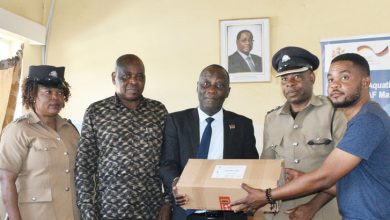
Speaking recently when the Department of Disaster Management Affairs (Dodma) handed over 406 bags of maize with logistical support from the MDF through Nkhata Bay District Council, the group’s chairperson Albert Mtungambera Harawa welcomed the aid, but called it a ‘temporary bandage’ on a festering wound.

He said: “We are grateful, but people here consume about 10 bags a day. That means the supply will last only a few weeks and then what? We need a permanent solution.”
Harawa cited the April 28 Mzuzu Senior Resident Magistrate’s Court judgement which acquitted two men accused of trespassing on MDF land and directed stakeholders to resolve the underlying land dispute within 90 days.
“I wish government acted on the court’s directive. The best way is to let us return to our lands with tents supplied by Dodma or resettle us where the government sees fit.
“If these people were home, they would cultivate green vegetables to sustain themselves,” he said.
Harawa described conditions at the makeshift churches camp as dire, with families lacking blankets, buckets and proper shelter, after many of their belongings were destroyed during the MDF raid.
He said at least 40 secondary school learners from Kasasile alone have dropped out of Choma Community Day Secondary School (CDSS) and up to 240 primary learners aged six to 15 have been affected.
He said the closure of Bunji Junior Primary School near where they were evicted has forced learners to abandon school altogether.
“Only a few go to Kasasile Primary School just to pass time, but the presence of the soldiers in their areas continues to traumatise them. Most parents are too afraid to send their children to school,” said Harawa.
Gift Mwale, a 19-year-old Form One student who stopped going to Choma CDSS, said apart from losing their books and uniforms, their parents can no longer afford school fees.
He is one of many boys and men who walk long distances to tobacco farms in search of piecework just to have an extra meal or to feed their families.
“Without mats or blankets, we sleep on bare ground and rely on women’s wrappers to cover ourselves while bathing in makeshift bathrooms,” he said.
Moses Phiri, 43, a father of six, lost his house, kitchen and property worth millions during the raid.
He said there is no hope or plan for the future.
“There’s no clinic here. The nearest is nine kilometres away at Choma. People are constantly sick. We survive by the grace of God,” he said.
Dodma spokesperson Chipiriro Khamula said their response is guided by needs the council submitted.
“Apart from the maize delivered, we are now mobilising blankets and buckets which are in great need at Kasasile. We hope to deliver them soon,” he said.
Nkhata Bay District Council spokesperson Chisomo Kambandanga said the initial request prioritised food, but additional needs would be communicated to Dodma.
Ministry of Lands, Housing and Urban Development spokesperson Mphatso Nkuonera said the ministry was working towards finding a permanent solution.
“Discussions are underway and resettlement appears to be option number one among many,” he said without mentioning other options.
Meanwhile, Senior Chief M’bwana, from whose area many of the affected people originate, said they have been looking for land for resettlement and a small portion has been found, but they hope to find a bigger land soon.
The two camps currently shelter about 1 700 displaced individuals, including women and children, who were forcibly evicted from their homes over claims of land encroachment.
They lost homes, livestock and personal property during the eviction.
They have been living at the camp for the past six months, relying primarily on assistance from the Church and Society Programme of the CCAP Synod of Livingstonia, the Catholic Commission for Justice and Peace, Youth and Society and other well-wishers.